
SF-BR-04A vs SF-BR-06A: Detachable or One-Piece Tabletop Water Bottle Rack?
Short answer: pick the detachable SF-BR-04A when flat-pack shipping volume, part-level replacement and a taller dispensing frame matter most. Pick the one-piece SF-BR-06A when you want a welded, chrome-plated steel wire frame that arrives assembled and keeps a low profile on the counter. Both hold one 5-gallon bottle, both use a PP spigot, and both are tabletop dispensing racks rather than bulk storage racks. The real decision sits in construction, footprint and packaging economics — not in one model being inherently superior.
This comparison is written for importers, distributors, private-label brands and facilities buyers who are screening tabletop models before they request samples, confirm carton dimensions or commit to a container load. Every dimensional and material statement below comes from SHAFON product data; engineering statements that go beyond the data sheet are flagged as items to confirm at sampling.
Water Bottle RackTabletop 5 Gallon Water Bottle RackDetachable Water Bottle RackSpace SavingWhy buyers get stuck between these two models
The two racks answer the same basic need — lift a 5-gallon bottle off the counter so the spigot can be used — but they solve it with opposite supply-chain logic. One ships knocked down and is rebuilt at the destination. The other is welded into a single unit and ships assembled.
That difference creates three tensions that buyers keep running into:
- Counter geometry. A tabletop water jug rack has to fit a real counter, and it has to leave room for a glass, kettle or jug under the spigot. Footprint and height decide this, not material.
- Assembly and packaging. A detachable design lowers shipping volume but transfers assembly to the warehouse, dealer or end user. A one-piece design removes that labour but consumes more carton space per unit.
- Quality control and repair. A welded frame has few parts to check and nothing to re-tighten. A detachable frame has joints, connectors and fasteners, which means the inspection routine has to cover fit and tightness as well as coating and welds.
Buyers who skip this framing tend to over-specify. They order a flat-pack water jug holder for a home channel that cannot assemble it, or they order assembled cartons for a market where freight per set is the dominant cost line.
Industry background: where tabletop racks sit in the 5-gallon category
The 5-gallon water bottle rack category spans several distinct formats: foldable floor racks, multi-tier storage racks for depots and delivery fleets, vertical racks, raised U-type racks, and compact tabletop dispensing stands. Tabletop models are the smallest unit in that family. They hold a single bottle and are used where the bottle needs to be at working height rather than stored in volume.
Material conventions are fairly stable across the category. Commercial racks are commonly built from Q195 or Q235 steel tube with electrostatic powder coating in black, white or silver grey, from steel wire with chrome plating, or from PP plastic, and powder-coated steel tube is the most common choice for commercial and water-station use. The two models in this article sit on both sides of that convention: the SF-BR-04A uses Q195 steel tube with ABS plastic components, while the SF-BR-06A uses Q195 steel wire with chrome plating. Both use a PP spigot.
The load those frames carry is not trivial. A full 5-gallon jug weighs roughly 42–45 lbs (about 19–20 kg), so even a single-bottle tabletop stand has to hold that mass stably at counter height. Demand for racks in general is tied to urban living patterns and growing awareness of bottled water; a commercial market study published by Coherent Market Insights describes urban lifestyle and bottled-water awareness as the main demand drivers for water bottle racks. That is a directional market statement, not a sizing figure for the tabletop segment specifically.
A practical split also shows up in the available product evidence: steel and wire constructions dominate heavy-duty and commercial storage listings, while HDPE plastic dominates modular and stackable formats. That split matters here because it explains why a buyer comparing a tube-and-plastic detachable rack against a welded chrome wire rack is really comparing two different manufacturing routes, not two cosmetic variants.
The two racks, defined
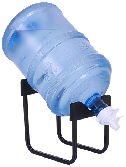
SF-BR-04A — 5-Gallon Water Bottle Rack (Tabletop), detachable
The SF-BR-04A is a detachable tabletop dispensing rack for one 5-gallon bottle, built from Q195 steel tube with ABS plastic components and fitted with a PP spigot. Its footprint measures 270 mm × 180 mm, with a front height of 225 mm and a rear height of 285 mm. Because the frame is detachable, it can be packed flat and re-assembled at destination — a structure aimed at buyers who ship in volume and accept assembly as part of the landed-cost calculation.
SF-BR-06A — 5-Gallon Water Bottle Rack (Tabletop), one-piece
The SF-BR-06A is a one-piece tabletop dispensing rack for one 5-gallon bottle, formed from molded and welded Q195 steel wire with a chrome-plated anti-rust finish and a PP spigot. Its footprint measures 24 cm × 19 cm, with a front height of 105 mm and a rear height of 170 mm. Because the frame is welded into a single unit, it ships assembled in an individual box and requires no joint assembly before use. It is positioned for household and office tabletop dispensing.
Construction: what detachable and one-piece welded actually change
The words “detachable” and “one-piece” describe how the frame is held together, and that single choice drives inspection, repairability and packaging.
Detachable (SF-BR-04A). The steel tube frame is broken into sub-assemblies that join through ABS plastic components. In production this means the tube sections, the plastic connectors and the PP spigot are separate items to verify, and dimensional consistency between tube ends and connector sockets becomes a quality variable in its own right. In service it means a damaged section can, in principle, be replaced without scrapping the whole stand — useful for dealers who stock spares rather than complete units. The trade-off is that joint tightness must be checked before shipment, because a loose connector is the failure mode a buyer will notice first.
One-piece welded (SF-BR-06A). The wire frame is molded and welded into a single structure, then chrome plated. There are no joints to re-tighten and no assembly step at destination. The dominant inspection point becomes weld integrity plus plating condition, and the dominant risk becomes surface damage in transit rather than joint creep. The open wire format also keeps visual mass low, which suits front-of-house counters where a boxy frame would look out of place.
Neither approach is automatically stronger. When buyers ask how to judge load capacity and structural stability on a rack, the usable criteria are tube or wire diameter and wall thickness — for example 20×20×0.6–0.8 mm steel tube or 16×0.8 mm wire — plus weld quality, base width and tier count. Apply the same logic here: request the wall thickness of the Q195 tube on the SF-BR-04A and the wire diameter on the SF-BR-06A, then compare base geometry against a real 42–45 lb bottle.
Footprint and height: reading the numbers against your counter
The footprint difference is smaller than the height difference, and buyers often get this backwards.
- SF-BR-04A: 270 mm wide × 180 mm deep. Front height 225 mm, rear height 285 mm.
- SF-BR-06A: 240 mm wide × 190 mm deep. Front height 105 mm, rear height 170 mm.
In plan view the SF-BR-04A is about 3 cm wider and 1 cm shallower than the SF-BR-06A — a difference that matters on a narrow counter run and barely matters on a deep one. In elevation the two models diverge sharply: the SF-BR-04A positions the bottle roughly 10–12 cm higher at both the front and rear reference points. In practice that taller frame raises the spigot above the counter, which is relevant when users fill tall vessels, kettles or 1-gallon jugs rather than cups. The lower SF-BR-06A profile fits more easily under wall cabinets, shelf overhangs and coffee-station canopies.
That reading is a geometric implication of the published heights, not a tested dispensing benchmark. Before committing, place the rack height next to the actual bottle height and the underside clearance of the counter you are targeting, and confirm with a physical sample.
Finish and corrosion: chrome-plated wire versus a coated tube frame
The SF-BR-06A is specified with a chrome-plated anti-rust finish on Q195 steel wire. The SF-BR-04A’s product data specifies the Q195 tube and ABS components but does not state a surface finish, so the finish should be confirmed in writing at quotation stage rather than assumed from the material list.
On finish comparison in general, powder coating offers broad color options and good surface protection when properly applied, while chrome plating gives a bright metallic appearance. Corrosion performance for either finish depends on substrate preparation, coating or plating quality, thickness, and the service environment. That is the correct answer to give a buyer who asks which finish is “better” — the honest reply is that it depends on preparation and environment, and that a humid or steam-adjacent location deserves a specific finish specification in the purchase order rather than a generic one.
For practical procurement, ask three questions of either model: what substrate preparation precedes the finish, what thickness or plating class is applied, and what the supplier’s inspection criterion is for rust and scratches at pre-shipment. The third question is the one that most often exposes a weak specification, because it forces a measurable acceptance standard.
Packaging, assembly and freight economics
This is where the two designs separate most clearly, and where the detachable model earns its place in a container plan.
Foldable and detachable rack types ship flat — in OPP bag or paper card packaging — while one-piece types ship assembled in individual boxes. Both are easy to set up on arrival, but only one of them consumes carton cube in its assembled form.
The packaging advantage is quantifiable. Detachable rack designs pack flat at about 30 sets per carton, roughly 60–70% less shipping volume than one-piece racks, which materially reduces ocean freight cost per set. For a distributor importing by the container, that volume difference changes the landed cost structure of the entire order line. For a buyer who needs shelf-ready units without any assembly labour — a retail chain, a hotel group or a small office channel — the assembled SF-BR-06A carton may still be the cheaper total option once assembly time and re-packing are counted.
Decision rule: if freight volume dominates your cost model and you control a warehouse that can assemble, the detachable SF-BR-04A wins. If labour is expensive, storage is tight, or the unit must ship direct to the end user, the assembled SF-BR-06A wins.
Side-by-side comparison
| Attribute | SF-BR-04A | SF-BR-06A |
|---|---|---|
| Product type | 5-Gallon Water Bottle Rack (Tabletop), detachable | 5-Gallon Water Bottle Rack (Tabletop), one-piece |
| Design logic | Detachable frame, re-assembled at destination | One-piece molded and welded frame |
| Main structure | Q195 steel tube | Q195 steel wire |
| Secondary material | ABS plastic components | Not stated in product data |
| Finish | Confirm at quotation | Chrome plated, anti-rust |
| Spigot | PP spigot | PP spigot |
| Footprint | 270 mm × 180 mm | 24 cm × 19 cm |
| Front height | 225 mm | 105 mm |
| Rear height | 285 mm | 170 mm |
| Bottle capacity | One 5-gallon bottle | One 5-gallon bottle |
| Supply form | Flat pack | Assembled, individual box |
| Shipping volume | About 30 sets per carton, roughly 60–70% less volume than one-piece racks | Assembled carton cube |
| Primary inspection focus | Tube spec, plastic connector fit, joint tightness, spigot assembly | Wire spec, weld integrity, plating condition, spigot assembly |
| Typical fit | Volume importers, dealers stocking spare parts, taller dispensing points | Offices, homes, reception counters, direct-to-user shipments |
Step-by-step: how to decide and validate
- Measure the counter, not the catalogue. Record usable width, depth and overhead clearance. Compare against 270 × 180 mm (SF-BR-04A) and 240 × 190 mm (SF-BR-06A), then add the bottle’s own height to the rack height to check clearance.
- Define the dispensing task. Cups and small glasses tolerate a lower frame; kettles, tall jugs and 1-gallon containers favour the taller 225 mm / 285 mm front-and-rear geometry of the SF-BR-04A.
- Cost the assembly step. Decide who opens the carton. If the answer is “the end user”, the one-piece SF-BR-06A removes a friction point. If the answer is “our warehouse”, the flat-pack SF-BR-04A’s ~30 sets per carton and 60–70% volume reduction is the stronger freight case.
- Fix the material specification in writing. Request tube wall thickness for the Q195 tube on the SF-BR-04A and wire diameter for the Q195 wire on the SF-BR-06A, alongside weld quality, base width and finish standard.
- Agree the QC checklist before production. Quantity, tube or wire specification, surface finish with no rust and no scratches, weld integrity, spigot assembly, packaging and shipping marks — covered by in-production inspection and pre-shipment inspection.
- Validate with a sample. Load a full 5-gallon bottle on the sample, check stability under a normal dispensing pull, and confirm the finish and joint behaviour in the destination climate before bulk release.
Use cases: which model fits which setting
Home kitchens and utility rooms
Residential storage typically prioritises safe materials, small capacity and light weight. The lower-profile SF-BR-06A fits under kitchen wall cabinets more easily, while the taller SF-BR-04A is the better pick where the counter is open above and the household fills larger vessels.
Office pantries and break rooms
Corporate office setups combine a rack, a bottle and a faucet or spigot in a shared pantry. Here the one-piece SF-BR-06A has an operational advantage: no assembly, no loose connectors, and a chrome wire appearance that reads as furniture rather than equipment.
Reception and retail counters
Where the rack is visible to customers, footprint discipline and finish quality matter more than carton economics. Both models are compact enough for a counter; the SF-BR-06A’s open wire form keeps the visual footprint lighter, while the SF-BR-04A’s height puts the spigot at a more comfortable pouring position for staff serving repeatedly.
Water delivery depots and fill stations
Delivery operations need fast handling and durability. A tabletop stand is a counter-side dispensing unit in this context, not a storage solution — the SF-BR-04A’s part-replaceable structure suits depots that keep spares, and its flat-pack carton suits depot-level assembly.
Hospitality, food service and events
Hotel pantries, restaurant back-of-house areas and temporary event service points need units that can be moved and cleaned around. The one-piece frame has no joints to loosen during repeated relocation; the detachable frame can be broken down for storage between events.
When neither is the right answer
If the requirement is bulk storage rather than single-bottle dispensing, the tabletop format is the wrong family. SHAFON’s wider range includes the SF-BR-17A double-row 3-tier rack holding 6 bottles, the SF-BR-20A triple-row 4-tier rack holding 12 bottles, the SF-BR-11G vertical rack holding 10 bottles, the SF-BR-22A storage rack with a storage platform for 2 bottles, the SF-BR-03A raised U-type rack, and the SF-BR-01A and SF-BR-02A foldable racks. For a water bottle rack with a top shelf or a heavy-duty multi-tier configuration, those models — not the tabletop pair — are the correct starting point.
Quality control: what to inspect on each design before shipment
A shared checklist covers most of the risk on both models: quantity, tube or wire specifications, surface finish with no rust and no scratches, weld integrity, spigot assembly, packaging and shipping marks. These are covered by in-production inspection and pre-shipment inspection.
Beyond the shared list, the emphasis shifts by design:
- SF-BR-04A: confirm tube wall thickness, check that ABS plastic components seat fully and consistently across the batch, verify fastener tightness after assembly trials, and confirm the flat-pack carton can survive handling without tube-end deformation.
- SF-BR-06A: confirm wire diameter, inspect every weld node, verify plating condition on edges and contact points where plating is thinnest, and check that assembled cartons protect the chrome surface in transit.
Ordering either model from SHAFON WATER SOLUTION
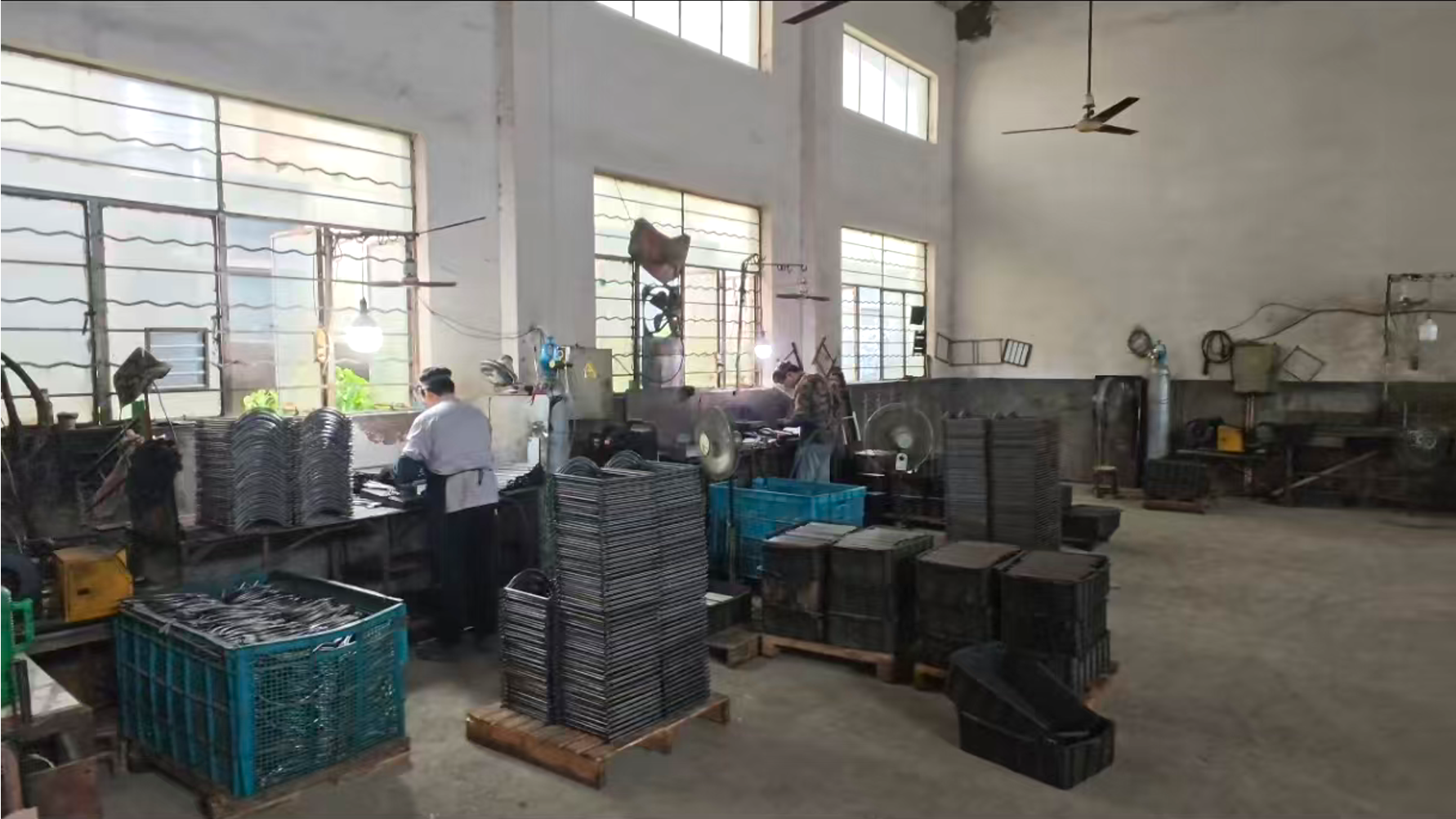
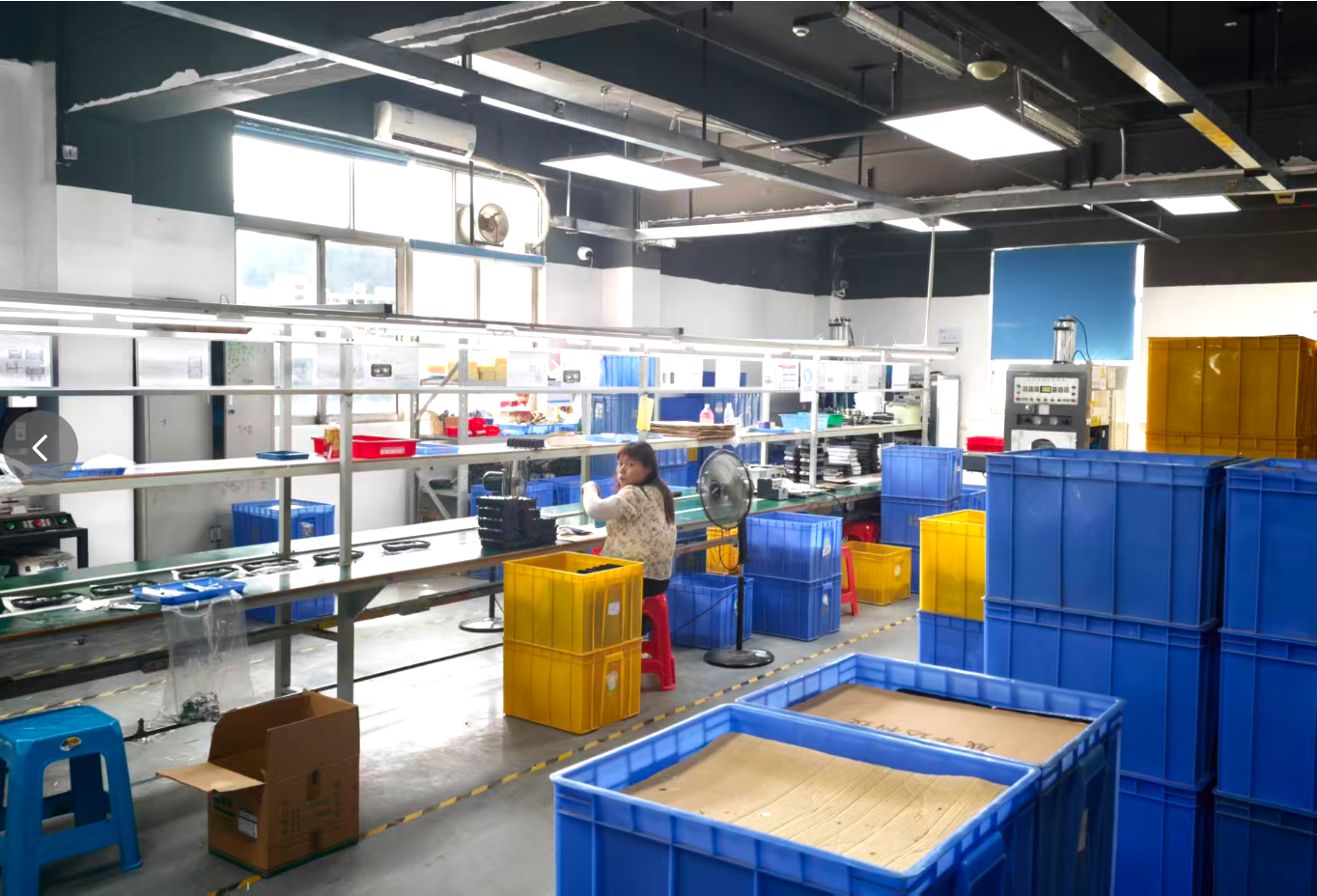
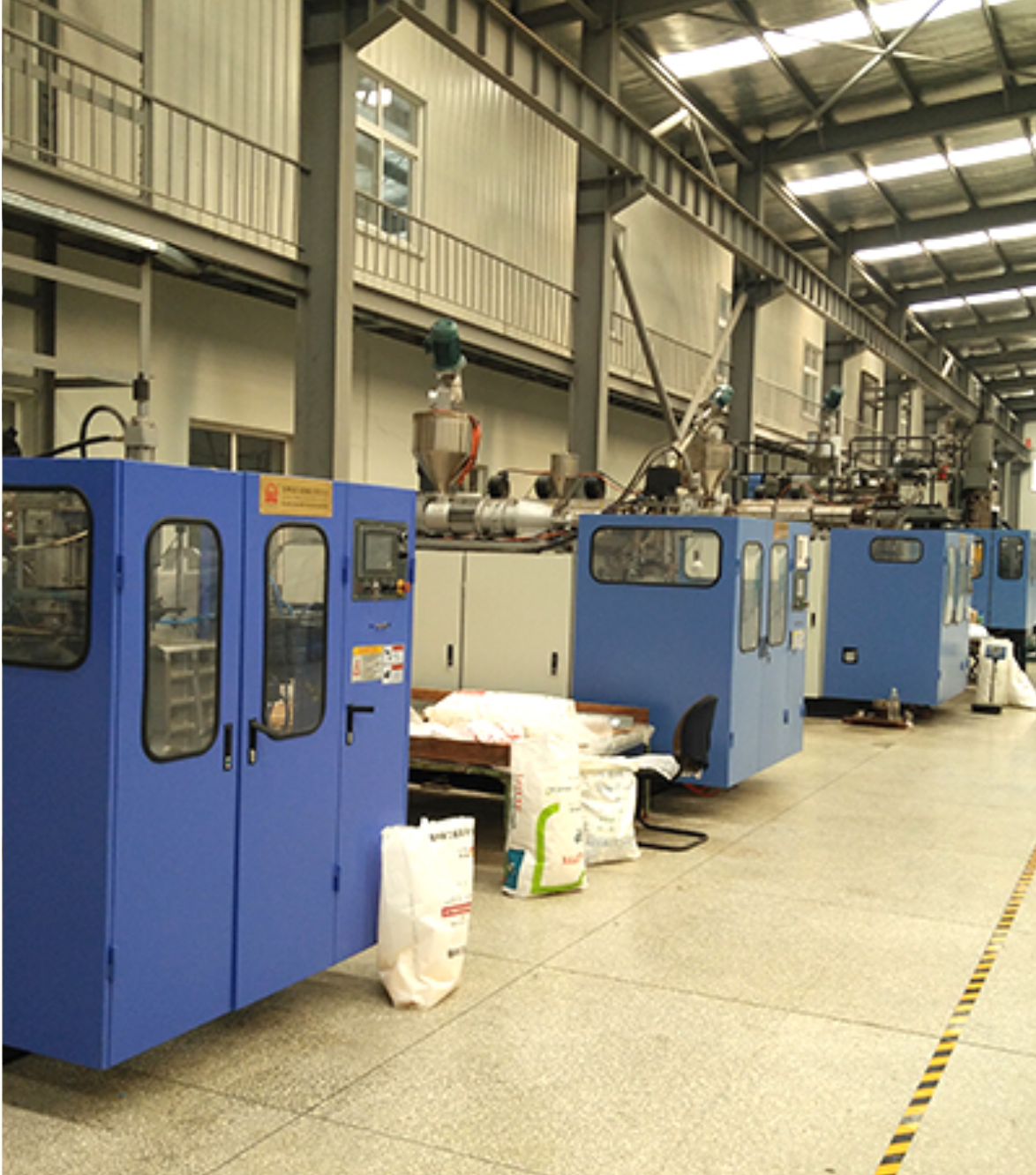
SHAFON WATER SOLUTION is the brand of Ningbo SHAFON Import & Export Co., Ltd., a China-based B2B supplier of water dispensing and water storage products operating from Cixi, Zhejiang. The company’s business roots date back to 2008 and the entity was formally established in 2015, with a 5,000 m² facility, around 20 employees, a 4–5 person R&D engineering team, and annual output of 240,000 water bottle racks alongside 9,000,000 water buckets. Exports account for 80–90% of shipments, serving distributors, wholesalers, private-label brands and commercial buyers in 30+ countries across North America, Europe, the Middle East, Southeast Asia and Africa.
For OEM and ODM projects, the information needed to start is straightforward: product type, quantity, target market, rack color, logo, packaging requirement and any specific dimensions, with drawings and samples confirmed before bulk production. Racks can also be shipped together with matching PP faucets, bottle caps, bottle bases and other accessories in one order, which simplifies sourcing and freight. Compliance documentation depends on the specific product and destination market — food-contact test reports, RoHS-related testing, material reports or other product-specific documents can be coordinated where applicable, and ISO 9001 operates as a company-level quality management system.
FAQ
What compliance documents can be coordinated for a tabletop water bottle rack?
Compliance requirements depend on the specific product and the destination market. SHAFON can coordinate applicable testing and documentation based on product materials, functions and local regulatory requirements. Relevant documents may include food-contact test reports, RoHS-related testing, material reports, or other product-specific compliance documentation where applicable. ISO 9001 is a company-level quality management system rather than a product certification, so buyers should specify the exact market and the exact document set required before ordering.
How should a buyer evaluate load capacity and structural stability on these two designs?
Check tube or wire diameter and wall thickness — for example 16×0.8 mm or 20×20×0.6–0.8 mm steel tube — together with weld quality, base width and tier count. On the SF-BR-04A, add joint tightness at the ABS plastic connectors; on the SF-BR-06A, add weld node inspection across the one-piece frame. Product drawings and loading references can be shared on request, and a loaded sample test with a full 5-gallon bottle remains the most direct validation.
Powder-coated tube or chrome-plated wire: which finish suits which use?
Powder coating offers broad color options and good surface protection when properly applied; chrome plating gives a bright metallic appearance. Corrosion performance for either finish depends on substrate preparation, coating or plating quality, thickness and the service environment. The SF-BR-06A is specified with a chrome-plated anti-rust finish on Q195 steel wire; the SF-BR-04A’s finish should be confirmed at quotation stage. For humid or steam-adjacent locations, specify the finish and the acceptance criterion explicitly.
Does a detachable design actually reduce freight cost compared with a one-piece rack?
Yes, on volume. Detachable and foldable rack designs pack flat at about 30 sets per carton, roughly 60–70% less shipping volume than one-piece racks, which significantly reduces ocean freight cost per set. That advantage has to be weighed against the assembly labour transferred to the warehouse or end user. One-piece racks ship assembled in individual boxes, which costs more volume but removes the assembly step entirely.
Are the racks supplied assembled, and how do I request a sample?
Foldable and detachable types ship flat in OPP bag or paper card packaging, while one-piece types ship assembled in individual boxes; all models are easy to set up on arrival. To evaluate the SF-BR-04A against the SF-BR-06A on your own counter, request a sample and the current catalogue by emailing azhang@shafonwater.com or messaging +86 133 4598 9797 on WhatsApp, quoting the two model numbers, your target market and your estimated order quantity so drawings and packaging options can be confirmed together.
Conclusion: the decision in one paragraph
Both the SF-BR-04A and the SF-BR-06A are single-bottle tabletop dispensing racks with a PP spigot, and the choice between them is a supply-chain choice before it is a product choice. The detachable SF-BR-04A — Q195 steel tube, ABS plastic components, 270 mm × 180 mm footprint, 225 mm front and 285 mm rear height — suits buyers who ship in volume, want part-level replacement and need a taller dispensing position. The one-piece SF-BR-06A — welded Q195 steel wire, chrome-plated anti-rust finish, 24 cm × 19 cm footprint, 105 mm front and 170 mm rear height — suits buyers who want an assembled, low-profile unit with no joint maintenance and no assembly labour at destination. Confirm tube or wire specification, finish standard and the pre-shipment QC checklist in writing, then validate on a loaded sample before bulk release.
Next step: sample, quotation or catalogue
Compare the SF-BR-04A and SF-BR-06A on your own counter before committing to a container plan. Request a sample, a quotation for your target quantity, or the current product catalogue — including matching PP faucets, bottle caps and bases if you want a combined shipment.
Email:azhang@shafonwater.com | Tel / WhatsApp: +86 133 4598 9797 | Web:www.shafonwater.com
Catalogue download:SHAFON Smart Water Solution product catalogue (PDF)
Have Questions or Need More Details?
Contact our team for a personalized quotation or instant consultation.
Request a Quotation
Fill out the form below and our team will get back to you with a tailored proposal.
WhatsApp Direct Chat
Prefer to chat in real-time? Message us on WhatsApp for instant assistance & quick answers.
- Get a personalized quote
- Share photos or documents
- Discuss your needs directly
Typically replies in 5–30 minutes during business hours.