
Water Bottle Rack Export Compliance: Certification & Pre-Shipment QC
Water Bottle Rack Export Compliance: Certification & Pre-Shipment QC
Export compliance for a water bottle rack is not one certificate. It is a set of three written agreements made before the first order: which product documents the supplier can actually provide for your destination market, which inspection criteria apply to each model, and which approved sample the bulk production will be measured against. Buyers who settle these three points in writing before production starts avoid the most common import disputes in this category.
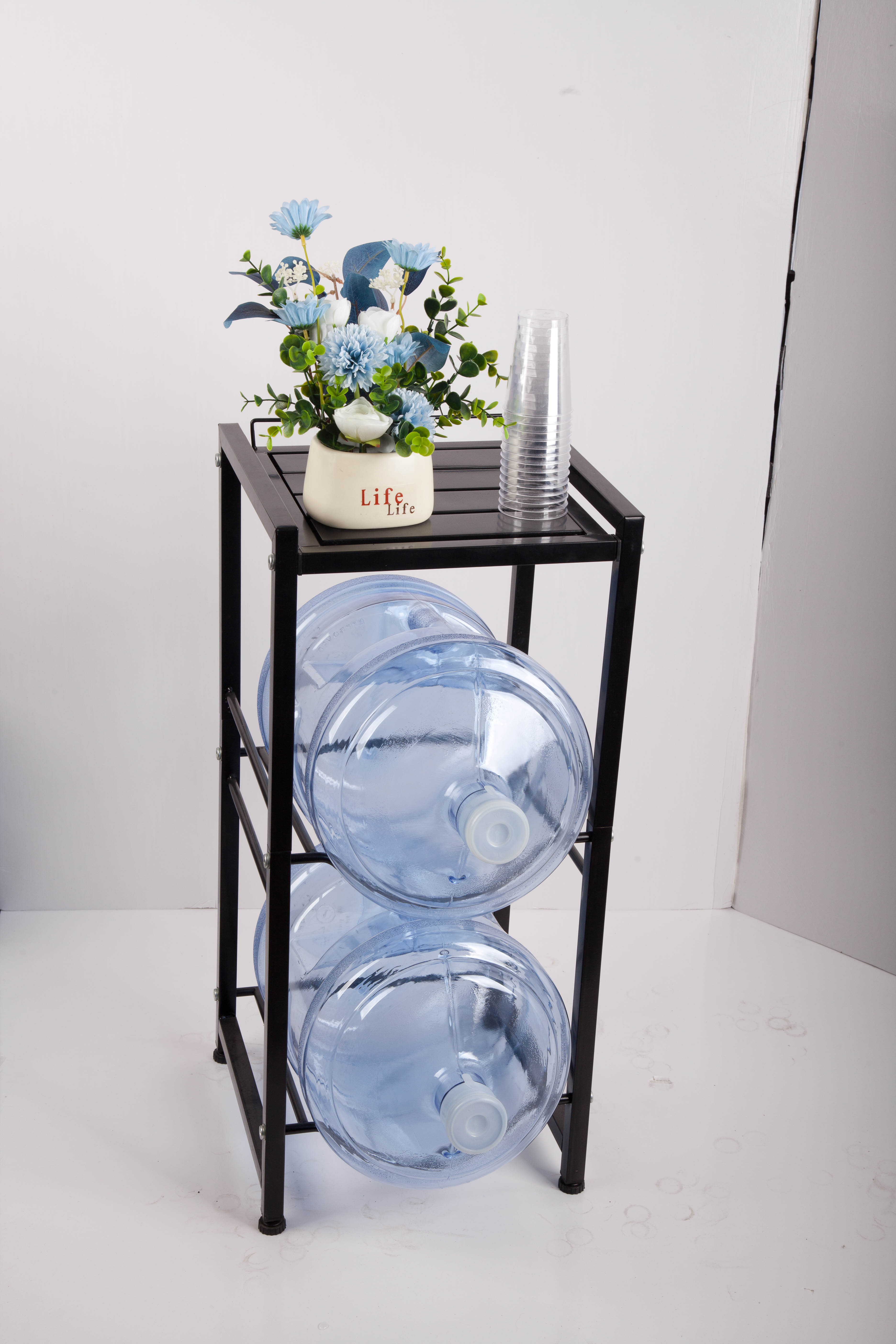
Steel-tube 5-gallon water bottle storage rack (SF-BR-22A) — frame material, surface finish and faucet assembly are the three inspection points most often written into a buyer's pre-shipment checklist.
Who This Guide Is For
This guide is written for importers, wholesalers, water delivery companies and private-label buyers who source 5-gallon water bottle racks, water jug racks and food-contact water buckets from China, and who need a compliance and quality-control procedure they can hand to a supplier before the first purchase order.
Ningbo SHAFON Import & Export Co., Ltd., operating under the brand SHAFON WATER SOLUTIONS, is a China-based B2B supplier of water bottle racks, water buckets, non-electric water dispensers, bottle caps and related accessories. The company was formally established in 2015, traces its business roots to 2008, and exports to markets including the USA, Mexico, the UK, Saudi Arabia, Southeast Asia, Africa, the Middle East and Europe, with an export ratio of 80–90% across 30+ countries.
Where a specific figure, model or document appears below, it comes from SHAFON product and capability data or from published third-party product listings. Where a document cannot be confirmed in advance, the article says so rather than assuming it exists.
Problem Definition: Where Compliance and QC Actually Break Down
Most water bottle rack compliance problems are not caused by a defective product. They are caused by three documentation gaps that only surface after the container has shipped.
- The certificate is assumed, not confirmed. A buyer asks “do you have certification?” and receives a general answer. Rack compliance is product- and market-specific, so a general answer cannot be turned into an import file.
- There is no written inspection standard. Without a written list, the inspection becomes a judgement call at the factory gate, and “acceptable” is defined by whoever is standing in the warehouse.
- The approved sample is not the reference. When a bulk order differs from the sample, there is often no agreed document that says which one wins. The sample was approved visually, not against recorded specifications.
Each of these gaps is closed with paperwork, not with assurances. The rest of this article sets out the paperwork.
Industry Background: What Makes Racks a Compliance-Sensitive Category
Water bottle racks sit between two different regulatory worlds. The steel structure is a durable goods item; the parts that touch drinking water — buckets, faucets and sealing rings — sit in the food-contact category. Both need to be handled separately when building an import file.
Structurally, commercial racks are dominated by steel tube and steel wire construction. Published product listings in this category range from compact three-bottle and six-bottle collapsible wire racks to twelve-bottle and twenty-four-bottle steel racks positioned for high-volume facilities, and steel racks with welded wire shelves are listed in capacities from four bottles upward. Plastic alternatives also exist: high-density polyethylene racks are offered in modular, stackable formats for bottled-water storage.
The load is the reason the structure matters. A full 5-gallon jug weighs approximately 42–45 lbs, so a rack is not holding an empty container — it is holding a load that must be supported at every shelf, weld and base joint, repeatedly, for the life of the product.
On the trade side, plastic bottles and carboys are classified under HS code 3923.30 according to published customs guidance. Steel racks are a different article and should be classified with your customs broker for the specific construction and function; do not assume the container code covers the rack.
Detailed Solution: What to Confirm Before You Order
1. Confirm what the supplier can actually provide, by product and by market
SHAFON's stated position is that compliance requirements depend on the specific product and the destination market, and that applicable testing and documentation can be coordinated based on product materials, functions and local regulatory requirements. Relevant documents may include food-contact test reports, RoHS-related testing, material reports, or other product-specific compliance documentation where applicable. ISO 9001 is described as a company-level quality management system, which is different from a product test report.
This is the correct way to read a compliance answer: it is a process statement, not a fixed certificate list. A buyer should therefore ask a narrower question — “for model X, made from these materials, shipped to market Y, which documents can you provide and which can you not?” The answer to that question is what belongs in the import file.
2. Match the material specification to the document request
Documentation follows material. The rack range includes Q195 and Q235 steel tube with electrostatic powder coating in black, white or silver grey, steel wire with chrome plating, and PP plastic components. Powder-coated steel tube is the most common choice for commercial and water-station use. Faucets use food-grade PP with food-grade silicone sealing rings, and water buckets use food-grade PE or PC material.
Those material statements are what a test request is built on. If the coating, the steel grade or the faucet material changes between the sample and the bulk order, the document that was issued no longer describes the goods being shipped.
3. Agree the pre-shipment inspection points in writing
SHAFON's stated inspection scope covers quantity, tube and wire specifications, surface finish (no rust, no scratches), weld integrity, faucet assembly, packaging and shipping marks, delivered through in-production inspection plus pre-shipment inspection.
That list is a workable template, but it only becomes enforceable when it is attached to a purchase order with tolerances and acceptance criteria. “No rust” needs a definition. “Tube specification” needs the measured value written next to it.
4. Separate the structural check from the cosmetic check
Load capacity and stability should be evaluated through tube and wire diameter and wall thickness — for example 16 × 0.8 mm steel tube, or 20 × 20 × 0.6–0.8 mm steel tube — together with weld quality, base width and tier count. SHAFON can share product drawings and loading references on request.
Buyers should request those drawings before approving a sample, because they convert “looks strong” into a measurable specification. The specific models in this range show how much the structure varies: SF-BR-01A and SF-BR-02A foldable racks use 16 × 0.8 mm steel tube; SF-BR-03A uses 13 × 13 × 0.9 mm steel tube with phosphating and electrostatic powder spraying; SF-BR-11C uses 20 × 20 × 0.8 mm steel tube with electrostatic powder spraying; SF-BR-22A uses 20 × 20 × 0.6 mm steel tube with a storage platform.
5. Confirm the packaging format, because it changes the inspection
Foldable racks pack flat at about 30 sets per carton, roughly 60–70% less shipping volume than one-piece racks, which significantly reduces ocean freight cost per set. Foldable types ship flat in OPP bag or paper card packaging, while one-piece types ship assembled in individual boxes.
This affects the checklist directly. A flat-packed carton is inspected for set count, hardware completeness and carton marks. An assembled one-piece rack is inspected for transit damage and individual box integrity. One checklist cannot cover both.
6. Handle the bulk-versus-sample gap with documents, not opinions
When bulk quality differs from the approved sample, the outcome depends entirely on what was recorded at approval. The buyer's working method should be:
- Keep one sealed reference sample and one signed specification sheet per model.
- List each inspection point as a pass/fail line, not a paragraph.
- Ask for inspection records with photographs against that list before the container is released.
- Do not release shipment on a verbal assurance that the difference is “normal production variation”.
- Confirm any accepted deviation in writing, so the next order is measured against the updated standard rather than the original one.
This is the single highest-value habit in this category. It costs almost nothing at the sampling stage and prevents the argument that usually cannot be won after the goods have arrived.
7. Collect the import documents with the inspection file, not after it
Commercial documents — invoice, packing list and transport documents — should be checked against the inspection record before release. Which additional import documents your market requires is a question for your customs broker and your destination authority; it is not something a supplier should be assumed to know for every market.
Step-by-Step Breakdown: A Pre-Order Compliance and QC Sequence
Step 1 — Define the destination market and the product that will enter it
Name the country, the model and the intended use. A rack sold to a water delivery company and a rack sold for home storage pass through the same production line but may carry different document requirements. Write the destination market into the purchase order.
Step 2 — Request the document list in writing, per product
Ask which of the following apply to your specific models and market: food-contact test reports, RoHS-related testing, material reports, or other product-specific compliance documentation. Record which items are available and which are not. An unavailable document is a known condition; an assumed document is a shipment risk.
Step 3 — Lock the material and finish specification
Confirm steel grade, tube or wire dimensions and wall thickness, coating type and colour, and faucet material. Note that the finish is part of the specification: powder coating offers broad colour options and good surface protection when properly applied, while chrome plating gives a bright metallic appearance, and corrosion performance for either depends on substrate preparation, coating or plating quality, thickness and the service environment.
Step 4 — Approve the sample against a written sheet, not a photo
For OEM racks, drawings and samples are confirmed before bulk production. Use that stage to record dimensions, finish, hardware count and packaging. Keep the approved sample sealed and referenced in the purchase order.
Step 5 — Set the inspection criteria and the unit load assumption
Build the checklist around quantity, tube and wire specification, surface finish, weld integrity, faucet assembly, packaging and shipping marks. Add the load assumption: a full 5-gallon jug is approximately 42–45 lbs, so tier count and base width need to be justified for the number of bottles the rack will hold.
Step 6 — Confirm the packing format and carton marks
State whether the model ships flat or assembled, how many sets per carton, and what must appear on the carton. For foldable models the reference figure is about 30 sets per carton; for one-piece models each unit ships in its own box. Shipping marks are a named inspection point, not an afterthought.
Step 7 — Run the pre-shipment inspection against the list and release in writing
In-production inspection plus pre-shipment inspection is the stated control method. The buyer's job is to confirm the record matches the agreed list, resolve any open deviation in writing, and only then release the balance and the documents.
Use Cases: Where the Checklist Changes
Water delivery companies and bottled-water distributors
High handling frequency puts welds, base joints and faucet assembly under repeated stress. The checklist should weight weld integrity, surface finish and faucet assembly heavily, and should confirm the rack configuration against the number of bottles handled per route. Larger-capacity and stacking-oriented formats exist in this category specifically for high-volume and transport use, so capacity should be specified rather than assumed.
Offices, commercial premises and hospitality
Foldable and one-piece tabletop racks are common here, and appearance matters as much as structure. Colour consistency, chrome or powder-coated finish quality and assembly cleanliness should be named inspection points. A hotel and catering supplier buying one 40HQ container every two months over a one-year period is an example of a buyer profile where capacity, materials, packaging and spare parts details were the deciding review points.
Private-label and OEM brands
Branding, packaging and colour become part of the specification, so the approved sample must capture logo placement and carton artwork as well as the product. A private-label buyer shipping two 40HQ containers per month over a one-year period is an example where structured product inspection, packaging confirmation and shipment preparation were the working method.
Wholesale and warehouse operations
Stacking, carton strength and set count per carton drive the inspection. For flat-packed foldable racks, the volume advantage — roughly 60–70% less shipping volume than one-piece racks — only holds if the carton count and packing method match what was quoted.
Comparison Table: Compliance Focus by Component
The table below separates the rack from the drinking-water contact parts. Each row is a distinct request to put to a supplier.
| Component | Material / finish in the range | Why it is a compliance point | What to confirm in writing |
|---|---|---|---|
| Rack frame | Q195 / Q235 steel tube or steel wire; 13 × 13 × 0.9 mm, 16 × 0.8 mm, 20 × 20 × 0.6–0.8 mm tube options | Carries a load of approximately 42–45 lbs per full jug, repeatedly | Tube or wire dimension and wall thickness, weld integrity, drawings and loading references |
| Surface finish | Electrostatic powder coating (black, white, silver grey) or chrome plating; phosphating treatment on some models | Corrosion performance depends on substrate preparation, coating or plating quality and thickness | Finish type, colour reference, acceptance criteria for rust and scratches |
| Faucet and sealing ring | Food-grade PP faucet with food-grade silicone sealing ring | Direct contact with drinking water | Material statement and, where applicable, food-contact test or material report |
| Water bucket | Food-grade PE or PC, including 18.9 L PE buckets | Direct contact with drinking water | Material statement and applicable food-contact documentation for the specific product |
| Packaging | Foldable: flat pack, OPP bag or paper card, about 30 sets per carton. One-piece: individual box, assembled | Determines transit protection, set count and shipping marks | Sets per carton, packing method, carton marks — listed as inspection points |
Comparison Table: Selected Models and Their Inspection Emphasis
Model-level specifications make the checklist concrete. The models below are taken from the SHAFON rack range and are compared only on published specification and construction, not on performance ratings.
| Model | Type | Material and finish | Size reference | Inspection emphasis |
|---|---|---|---|---|
| SF-BR-01A | Foldable A-type rack | 16 × 0.8 mm steel tube, phosphating + electrostatic powder spraying, PP spigot | 30 × 19.5 cm; front height 360 mm, rear height 400 mm | Fold mechanism, weld integrity, spigot assembly, flat-pack set count |
| SF-BR-02A | Foldable U-type rack | 16 × 0.8 mm steel tube, phosphating + electrostatic powder spraying, PP spigot | 30 × 19.5 cm; front height 280 mm, rear height 380 mm | Fold mechanism, finish consistency, valve faucet assembly |
| SF-BR-03A | Raised U-type rack | 13 × 13 × 0.9 mm steel tube, phosphating + electrostatic powder spraying, PP spigot | 34 × 19.5 cm; front height 400 mm, rear height 430 mm | Height and stability, base width, weld quality |
| SF-BR-04A | Detachable tabletop rack | Q195 steel tube + ABS plastic + PP spigot | 27 × 18 cm; front height 225 mm, rear height 285 mm | Detachable joint fit, plastic component finish, faucet function |
| SF-BR-11C | Vertical rack for 4 bottles | 20 × 20 × 0.8 mm steel tube, electrostatic powder spraying | 340 × 340 × 1080 mm | Tier count, detachable shelves, structural weld inspection |
| SF-BR-22A | Storage rack for 2 bottles with platform | 20 × 20 × 0.6 mm steel tube + powder coating | 330 × 350 × 730 mm | Platform load, tube specification, finish |
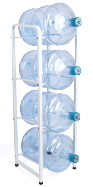
Multi-bottle vertical racks such as SF-BR-11C place the inspection emphasis on tier count, detachable shelf fit and weld integrity rather than on cosmetic finish alone.
Starting an OEM or ODM Rack Project: The Information the Factory Needs
For an OEM water bottle rack project, the stated requirement is: product type, quantity, target market, rack colour, logo, packaging requirement and any specific dimensions. Drawings and samples are confirmed before bulk production.
The commercial parameters that sit alongside that list are:
- Stock models: MOQ of 200–300 pcs for water bottle racks and water buckets, shipping within 5 days when in stock.
- OEM: MOQ of 500 pcs, customization of logo, colour, packaging and product matching, 15-day lead time.
- ODM: MOQ of 1,000 pcs, covering product development, structure and appearance design, and market-specific requirements, 30-day lead time.
- Capacity context: water bottle racks at 20,000–30,000 per month and water buckets at 750,000 per month, supported by in-production inspection and pre-shipment inspection.
Two details are worth adding to any OEM brief because they are frequently missed: the destination market (which drives the document request) and the packing format (which drives the freight calculation and the carton inspection).
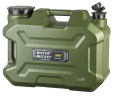
Food-contact buckets such as the 18.9 L PE model are documented separately from the steel rack, because the compliance question is different.
Proof: Where Inspection Sits in the Supply Chain
Inspection is not a separate service layer in this category; it runs alongside production. SHAFON describes quality control as integrated into the sourcing and production process, including material verification, dimensional checks, structural inspections, surface-finish evaluation, assembly checks and pre-shipment inspection as applicable, with full tracking from inquiry to delivery.
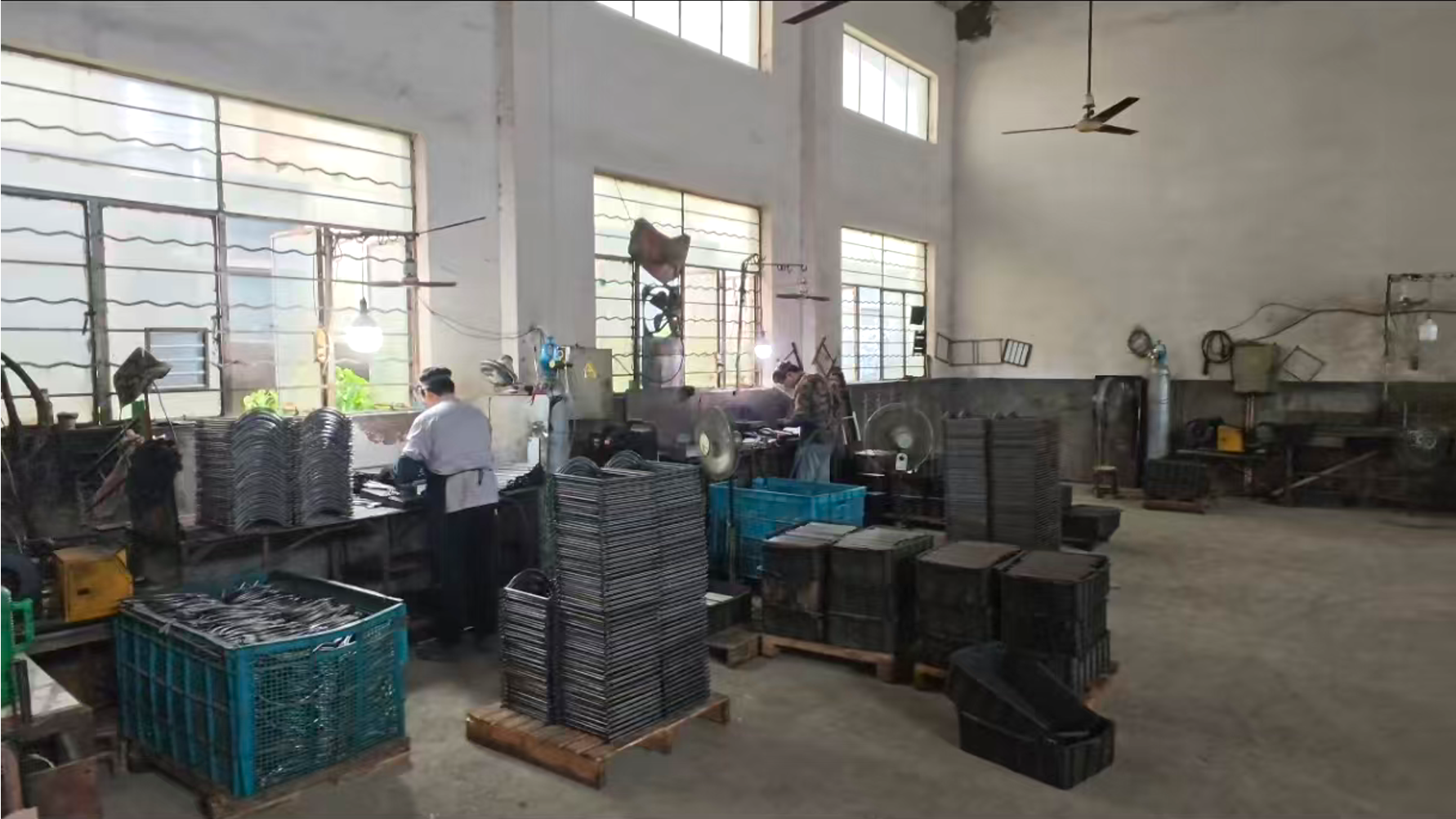
Weld integrity is a named pre-shipment inspection point, and it is created at the welding stage — which is why in-production inspection sits before the final check.
The working footprint behind that process is a 5,000 m² facility with 20 employees, annual output of 240,000 water bottle racks and 9,000,000 water buckets, and a 4–5 person R&D engineering team supporting customization work.
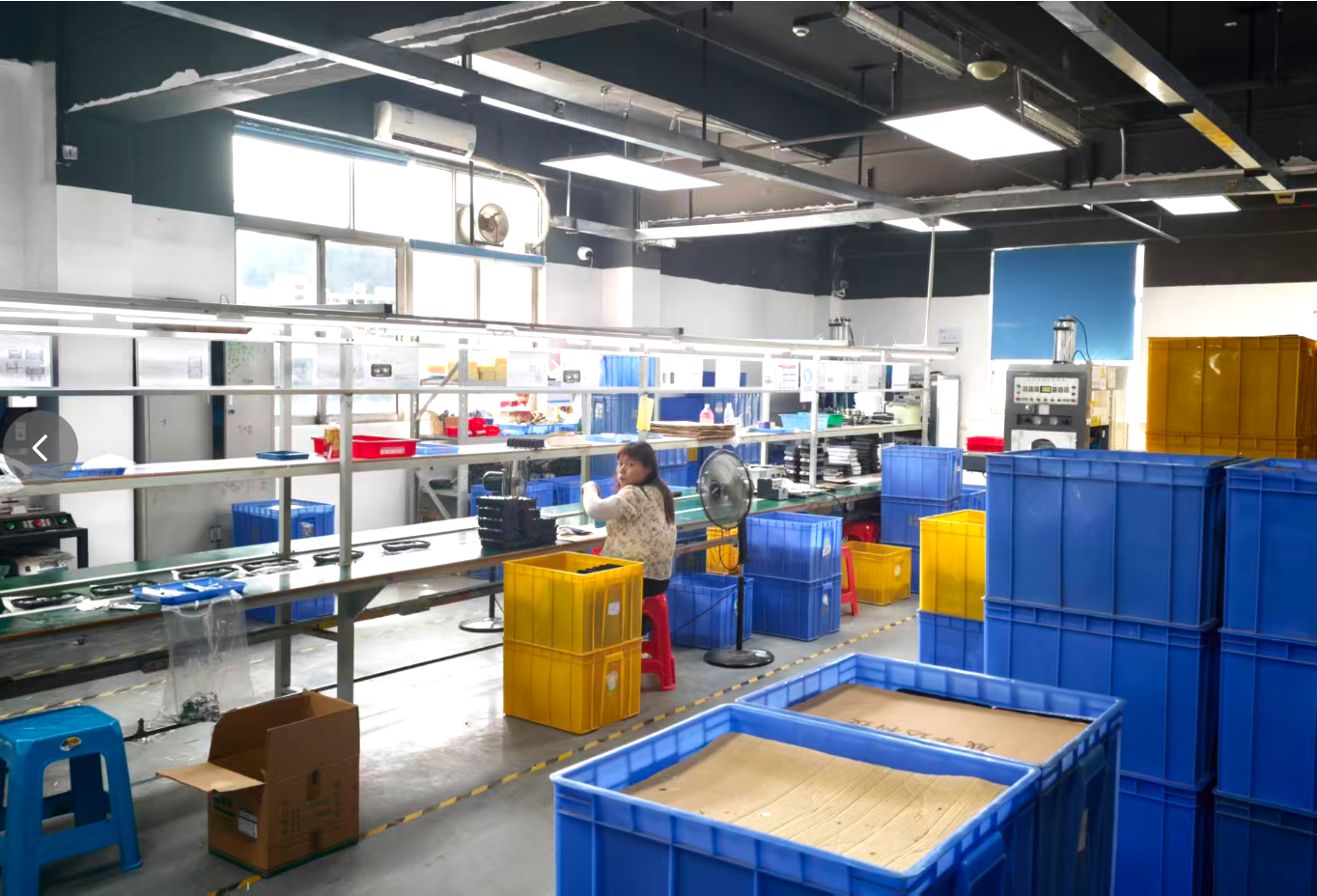
Faucet assembly and packaging are checked at assembly and pre-shipment stages, which is where a bulk-versus-sample difference is most often detected.
FAQ
What certifications can SHAFON provide for water bottle racks and water buckets?
Compliance requirements depend on the specific product and the destination market. SHAFON can coordinate applicable testing and documentation based on product materials, functions and local regulatory requirements. Relevant documents may include food-contact test reports, RoHS-related testing, material reports, or other product-specific compliance documentation where applicable. ISO 9001 is a company-level quality management system. Buyers should ask which documents apply to their exact model and market rather than assuming a fixed list.
What quality-control points are checked before shipment?
The stated inspection scope covers quantity, tube and wire specifications, surface finish (no rust, no scratches), weld integrity, faucet assembly, packaging and shipping marks. These points are covered by in-production inspection combined with pre-shipment inspection, which is why the checklist should be agreed before production rather than after.
What are the MOQ and lead time for water bottle racks?
Stock models carry an MOQ of 200–300 pcs for water bottle racks and water buckets, with shipping within 5 days when in stock. OEM orders start at 500 pcs with a 15-day lead time, and ODM orders start at 1,000 pcs with a 30-day lead time. Monthly capacity is 20,000–30,000 water bottle racks.
Can a sample be confirmed before bulk production?
Yes. For OEM rack projects, drawings and samples are confirmed before bulk production begins. The sample stage is also where the inspection list should be finalised, so that the approved sample and the written criteria describe the same product.
What information is needed to start an OEM or ODM water bottle rack project?
Share the product type, quantity, target market, rack colour, logo, packaging requirement and any specific dimensions. The target market is the item most often left out and the one that determines which documents are relevant. To begin, send that brief to SHAFON WATER SOLUTIONS at azhang@shafonwater.com, message +86 133 4598 9797 on WhatsApp, or review the current product range at www.shafonwater.com.
Conclusion
Export compliance for a water bottle rack is decided before production, not at the port. Three documents carry the weight: a written statement of which product documents are available for your specific model and market, an inspection list that names quantity, tube and wire specification, surface finish, weld integrity, faucet assembly, packaging and shipping marks, and an approved sample that both sides have signed against.
Everything else follows from those three. The structural check becomes measurable once tube dimensions and wall thickness are written down. The packaging check becomes meaningful once the flat-pack or assembled format is fixed. And the bulk-versus-sample question becomes answerable once there is a sealed reference to compare against.
Buyers who run this sequence once, on the first order, usually keep it for every order that follows. The cost is a few hours of documentation. The alternative is a container arriving with an unresolved question about what the goods were supposed to be.
Next step: put the checklist into a quotation request
Send your model, destination market, quantity and packaging requirement, and SHAFON WATER SOLUTIONS can confirm the applicable documents, the inspection points for that model, and the OEM or ODM schedule in writing. Sample and quotation requests are handled from the same brief, so the specification you approve is the specification that ships.
Download the current product and quotation brochure: SHAFON Smart Water Solution Quotation (PDF)
Flat-packed foldable racks such as SF-BR-02A are inspected for set count and hardware completeness per carton, not for assembled transit damage.
SHAFON WATER SOLUTIONS — Ningbo SHAFON Import & Export Co., Ltd.
Email: azhang@shafonwater.com | Tel / WhatsApp: +86 133 4598 9797 | Website: www.shafonwater.com
Address: Suite 22B/F, 355 Wenhua N. Road, Cixi, Zhejiang, 315300, P.R. China
Have Questions or Need More Details?
Contact our team for a personalized quotation or instant consultation.
Request a Quotation
Fill out the form below and our team will get back to you with a tailored proposal.
WhatsApp Direct Chat
Prefer to chat in real-time? Message us on WhatsApp for instant assistance & quick answers.
- Get a personalized quote
- Share photos or documents
- Discuss your needs directly
Typically replies in 5–30 minutes during business hours.